


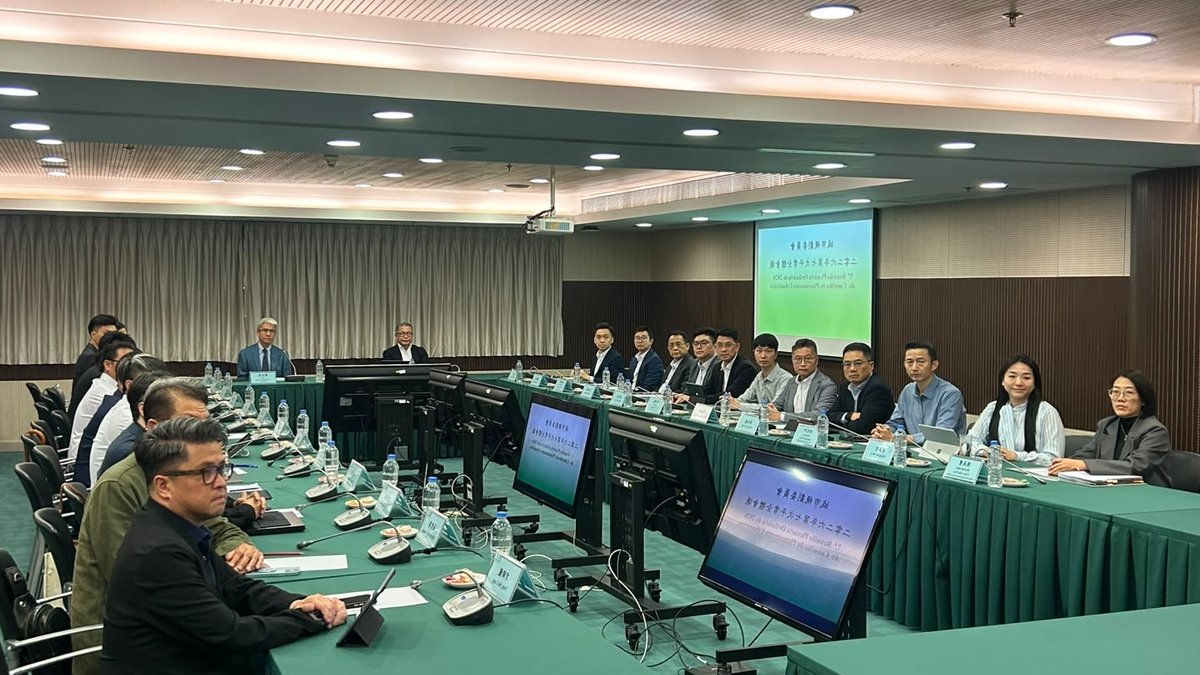
The Urban Planning Committee has raised concerns about a plan to intensify development on a Coloane industrial site, questioning its environmental impact and potential effects on the surrounding environment and natural features.
The site in Seac Pai Van, located near the northwestern coast of Coloane, is leased by the government to Namyue Holdings, a Guangdong provincial government-owned enterprise. The company, which began with traditional Chinese medicine operations, has expanded into emerging sectors like artificial intelligence to align with Macau’s “1+4” economic diversification strategy.
According to the document, the chief executive approved changes to the land concession in May 2025. The changes allow the complex to reach a maximum height of 50 meters and ease requirements on tree preservation and vehicular access. The industrial park currently consists of seven two-story buildings.
On Wednesday, industry experts shared their professional opinions at a meeting, where Wu Kim Kam, an expert in architecture, expressed concerns about the potential expansion of a site in Coloane. He cautioned that the production processes involved could result in increased environmental pollution, including wastewater, emissions, and noise, in the surrounding area. Wu Kim Kam also inquired about the possibility of incorporating green spaces and landscaping into the project to preserve the natural geography of Coloane.
Read Also: Casino firms spend MOP35bn on diversification projects since 2023
Chan Mei Pou from the Environmental Protection Bureau announced that an environmental impact assessment would be necessary before the project could move forward. This assessment will examine the potential effects of the project on nearby residential areas and schools, including noise and air pollution, to ensure compliance with legal requirements.
Leong Io Hong, head of the Urban Planning Department, discussed the requirements for green spaces in the project. According to the draft plan, a minimum of 30 percent of the open-air space must be allocated to greenery, and solar energy facilities can be integrated into the site’s green features. Leong Io Hong also stated that buildings exceeding 70 meters in width must be designed with breaks to avoid continuous structures, or else the developer must conduct an assessment to evaluate the potential impact on air circulation.
The committee’s discussion of the draft plan for the Seac Pai Van site also included a review of the status of Cheok Ka Village, a brownfield site in Taipa. The future of this site remains uncertain due to unresolved disputes over land ownership and ecological protection, and no specific plan has been proposed for its development, whether for residential, commercial, or tourism purposes.


