


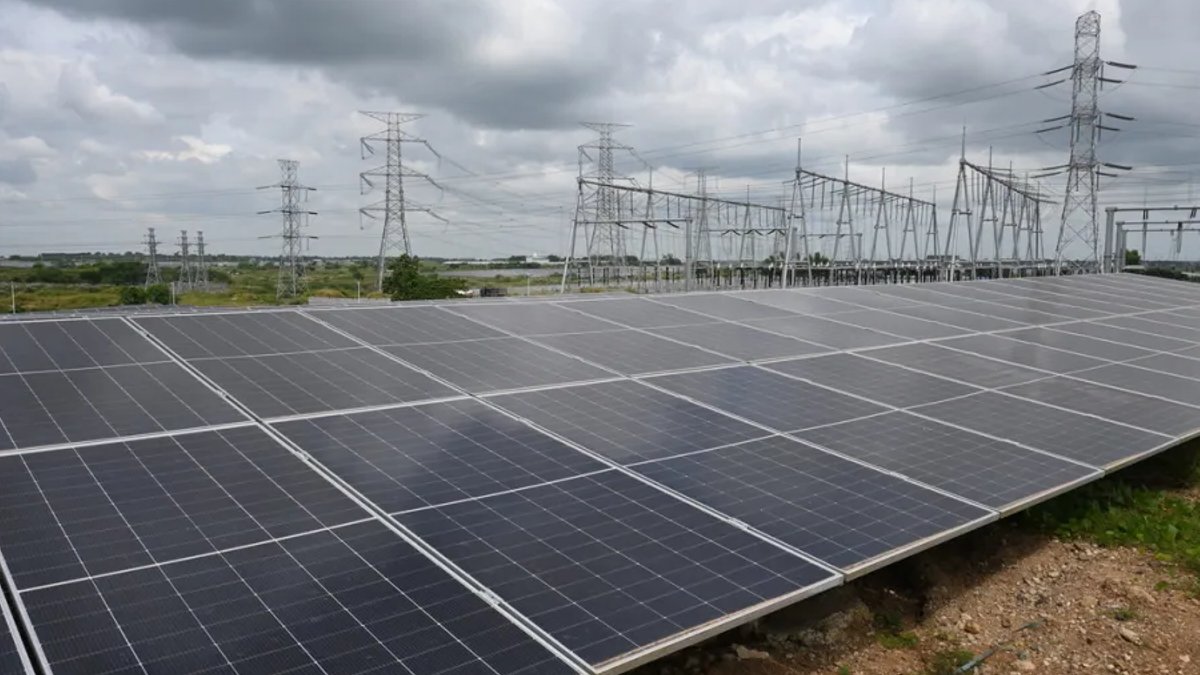
The MTerra Solar project in the northern Philippines has begun commercial operations, using battery storage to provide 600 megawatts of continuous electricity, even after sunset. The facility, developed by Meralco PowerGen Corp., combines solar power with energy storage to ensure a steady supply throughout the day. This approach allows the plant to harness solar energy beyond daylight hours, with stored energy released at night or during peak demand, as explained by Dennis B. Jordan, president and CEO of MGEN Renewable Energy, Inc., during a plant tour.
According to Antonio “Jun” Abuel, Jr., chief project officer for Phase 1, the project demonstrates how renewable energy can mimic the reliability of conventional power plants. Abuel highlighted that solar generation peaks between 10 a.m. and 2 p.m. and falls to zero by 6 p.m., with about half of the day’s output used to charge the battery energy storage system, which reaches 90% capacity by 1 p.m. The project’s scale also reduces generation variability, as cloud cover does not simultaneously affect the entire facility, though output can drop significantly during typhoons.
Read Also: Hong Kong shifts tourism focus to high-spending overseas visitors
Overcoming Challenges in Remote Locations
The project faced significant logistical challenges due to its remote location, including transporting workers and equipment and operating in extreme weather conditions. Despite these hurdles, construction began in November 2024, and the facility achieved commercial operations in less than two years. Phase 1 entered commercial operations on August 26, after securing approval from the National Grid Corporation of the Philippines to connect to the grid. This approval covers 950 megawatts alternating current (MWac) of solar capacity and 825 MW of battery storage.
Located across five municipalities in Nueva Ecija and Bulacan, the site was chosen for its high solar irradiance and available land. The project spans approximately 4,000 hectares and is valued at around $3.13 billion. Gapan, a city in Nueva Ecija, was specifically selected due to its favorable solar conditions and land availability.
Scaling Up for Greater Impact
At full capacity, MTerra Solar will have about 3,500 megawatt-peak of solar capacity and 4,500 megawatt-hours of battery storage. It is expected to generate around 5,000 gigawatt-hours of electricity annually, powering roughly 2.4 million households. The project is also projected to reduce carbon emissions by approximately 4.3 million tonnes each year, supporting the Philippines’ goal to increase renewable energy’s share in the power mix to 35% by 2030 and 50% by 2040.
Read Also: Jakarta data centre opens for AI workloads
Funding for the project includes a $2.34 billion syndicated loan from six local banks and a $600 million investment from UK-based Actis LLP. Jordan emphasized that the project supports efforts to reduce dependence on imported fuels and enhance energy security.
Community Engagement and Future Plans
The project engages with local communities through employment opportunities and benefit-sharing programs, as required by the Department of Energy. Phase 2, currently under construction, is set to add another 250 megawatts of capacity by 2027, with the same supply agreement covering this expansion. As of October 22, Phase 2 remains on track for completion in 2027.


