


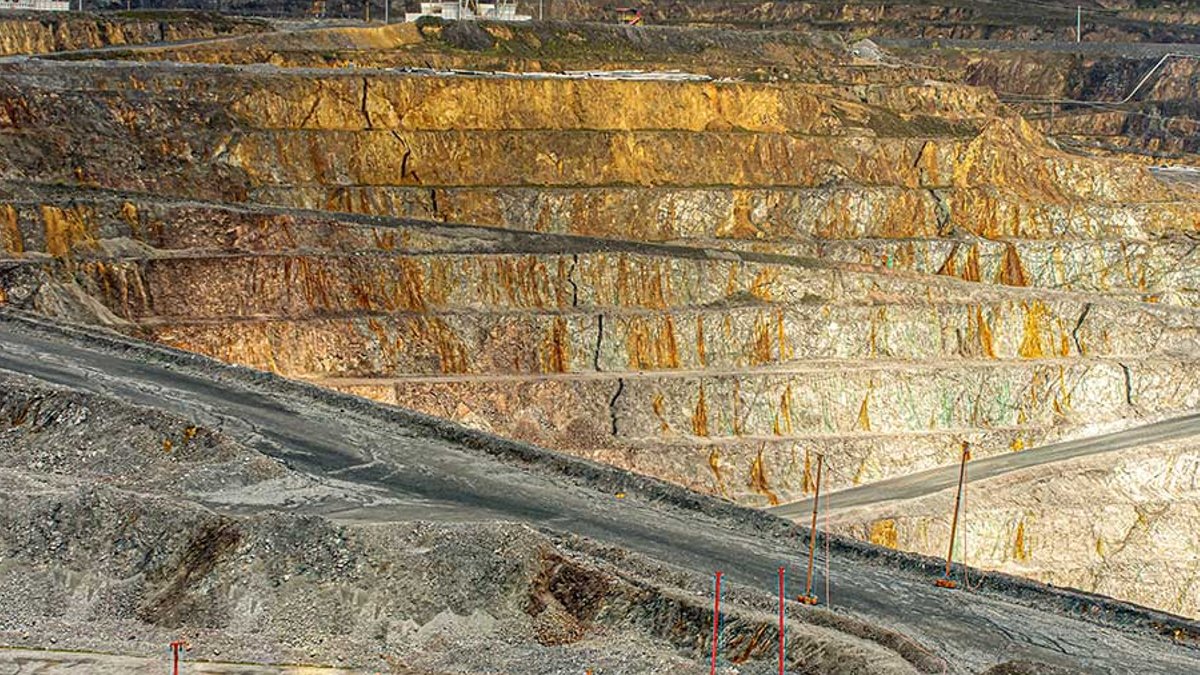
Panama’s government has begun talks with a Canadian mining company on reactivating Central America’s largest open-pit copper mine, despite strong opposition from environmentalists. Copper extraction at First Quantum Minerals’ Cobre Panama site was suspended in November 2023 after the Supreme Court declared the company’s mining concession unconstitutional because it violated environmental and public bidding regulations. The decision came after weeks of anti-mining protests that had paralyzed the country. First Quantum and its associates are seeking about $27 billion in damages – around 30 percent of Panama’s GDP.
Resuming Operations
President José Raúl Mulino has argued in favor of restarting production to help finance a costly, more gradual closure. Early this week, government ministers met with representatives of Minera Panama, the Canadian firm’s local subsidiary, to discuss the terms for resuming mining operations. The mine accounted for 75 percent of Panama’s exports, some five percent of GDP and around 7,000 direct and 30,000 indirect jobs. Though the Panama Canal remains a primary revenue source, Mulino has argued that the country should tap into growing global demand for copper, widely viewed as a critical mineral.
Read Also: Macau’s Neighborhood Tourism Hindered by Poor Promotion
Ecological Risks
Environmental groups dispute these economic arguments, warning that copper processing releases hazardous substances—including mercury, arsenic, and lead—posing severe threats to local ecosystems and freshwater supplies. The mine is situated in Donoso, a coastal district within Colón province, which lies within the Mesoamerican Biological Corridor, a network of protected areas linking biodiversity hotspots from southern Mexico to Panama.
During recent negotiations, Environment Minister Juan Carlos Navarro stressed that ecological safeguards must remain a top priority, while Commerce Minister Julio Molto emphasized the importance of citizen participation in the decision-making process. The project has several legal hurdles to clear. The government cannot reinstate First Quantum’s mining license, which was invalidated by the Supreme Court. Nor can it issue a new one, as the state in 2023 imposed an indefinite moratorium on new concessions for metals exploration and extraction. Mulino indicated that a new “legal framework” will be evaluated, without giving details.
Read Also: Spain’s Election to Shape Beijing Ties, Macau Watches
Industry representatives, including Severo Sousa, head of Panama’s Mining Chamber, and legal expert Harley Mitchell, proposed three potential pathways forward: state-led operation, outsourced management under Minera Panama, or a joint public-private venture. Minera Panama said it is committed to “transparency” and ensuring “full respect” for Panamanian sovereignty and citizen participation. The government estimates that winding down the mine definitively could take up to two decades and cost some $3.4 billion, nearly 10 percent of Panama’s projected 2026 budget.
The restart debate has deepened divisions in affected communities. Ilka Camargo, a former mine employee, views a resumption as a lifeline for the thousands displaced by the 2023 shutdown. Yet, opponents, including Leysi Rodríguez of the local peasant movement, remain skeptical, citing past environmental failures. They fear renewed protests could escalate, mirroring the 2023 clashes, which resulted in five fatalities, over 500 arrests, and substantial economic losses. Environmentalists insist the mine’s permanent closure remains the only viable solution.


