


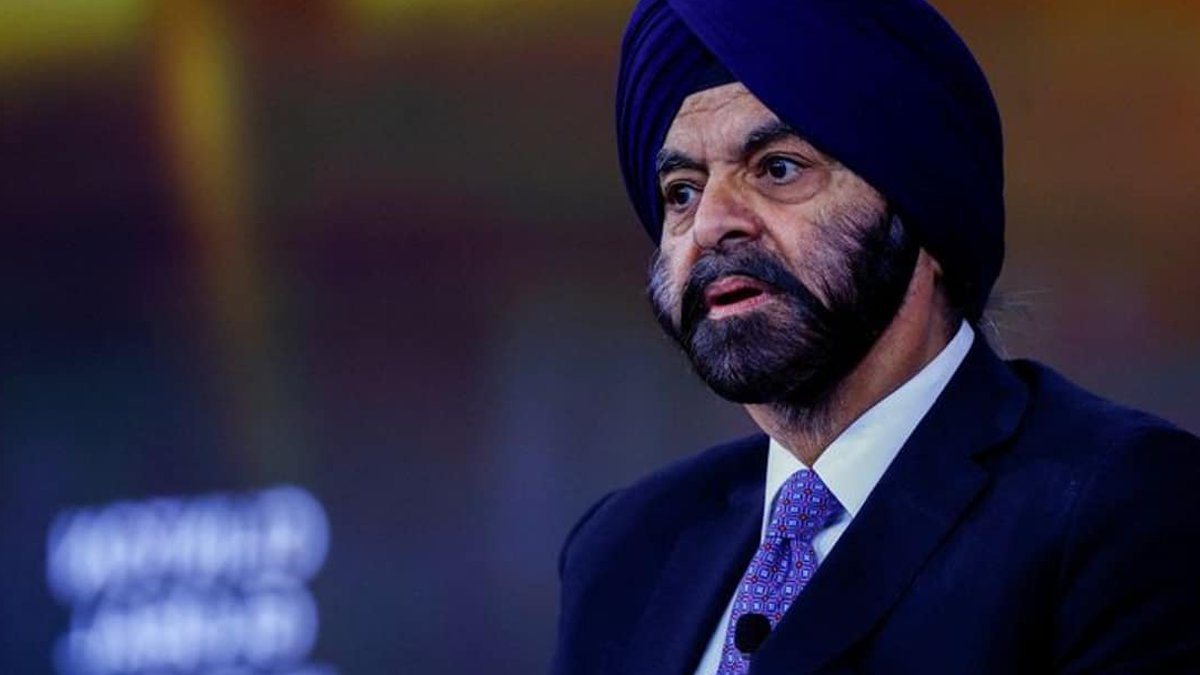
The World Bank president, Ajay Banga, revealed in an interview that the institution is engaging with roughly 30 to 40 nations to explore emergency financial support, aimed at helping them cope with energy disruptions and rising costs stemming from conflicts in the Middle East.
According to Banga, the global economy has demonstrated surprising strength, partly due to substantial investments in artificial intelligence and shifts in oil supply and demand trends. As a result, relatively few countries have accessed the $25 billion in emergency funding the World Bank released when hostilities escalated in late February.
Growing Strain on Developing Economies
Rising costs for diesel and fertilizers, along with the anticipated impact of a super El Niño weather event, are intensifying pressures on developing nations, Banga noted ahead of this week’s annual gatherings of the International Monetary Fund and World Bank.
World Bank is in talks with 30 to 40 nations about crisis aid, Banga says, and he noted that “We’ll see, but we’re ready. We’re engaged. We’re having conversations with a number of them, you know, 30 to 40 countries are in dialogue with us,” he said, referring to the initial $25 billion plus another $35 billion that countries could tap by diverting resources from already approved World Bank projects.
Many developing economies remain under severe strain from surging energy prices and raised interest rates, which have increased borrowing expenses at a time when public finances are still weakened by COVID-19 recovery efforts and inflation spikes following Russia’s invasion of Ukraine.
Projections from the World Bank indicate that by 2026, developing countries will owe roughly $400 billion to external lenders, with interest payments alone accounting for nearly one-third of that total.
Debt Burdens and Financial Strategies
Banga observed that more countries are opting to restructure ongoing projects rather than immediately tapping the crisis fund to address liquidity shortages. Should conditions deteriorate further, the institution could deploy up to $100 billion—surpassing the $70 billion distributed during the pandemic.
Read Also: Rosatom wins ruling in nuclear plant dispute
Earlier this month, the World Bank reported securing a historic $112 billion in private investment over the fiscal year ending in June, up from $69 billion the prior year and more than triple the 2022 figure before Banga, a former Mastercard executive, assumed leadership.
This private capital influx complemented $123 billion in funds from the bank’s own reserves, bringing the combined total to $235 billion, Banga emphasized, stressing the need to leverage all available resources amid reduced official development aid from Western governments.
The institution has already established debt-for-development swaps for Angola and Ivory Coast, along with a portfolio-based guarantee for Argentina, and is advancing over a dozen additional projects.
Private capital growth has been uneven across regions, with Latin America and the Caribbean leading at $36.3 billion, followed by Europe and Central Asia ($21.3 billion), South Asia ($19.2 billion), and Africa ($22 billion).
The top recipients of private capital last year included Brazil, India, Turkey, Romania, Nigeria, Argentina, South Africa, Bangladesh, Mexico, and Chile, according to the bank.
Debt Relief and New Financial Tools
Banga said the World Bank and IMF are working together to address the high debt levels plaguing many developing countries through a series of initiatives, including efforts to boost countries’ domestic revenue collections. “We’ve got 14 or 15 in the pipeline, helping them rotate out higher-priced old debt for newer-priced debt with our guarantees,” with the difference then targeted at education, healthcare, water, or nature programs, he said.


