


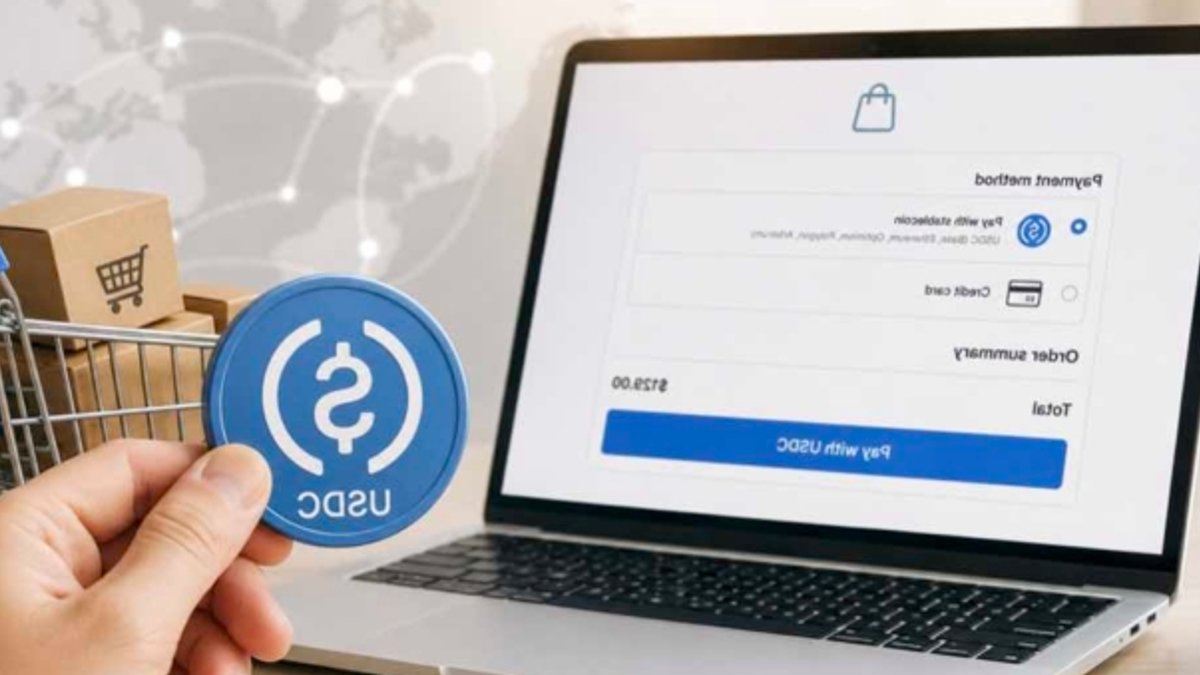
For e-commerce businesses, stablecoins offer an alternative payment method, particularly useful for international transactions, cross-border settlements, and customers with dollar-denominated crypto assets. To implement this option, merchants must select a payment model, specify supported assets and networks, and establish procedures for payments, refunds, and accounting, which involves more than just adding a wallet address to the checkout page.
Where Stablecoins Actually Improve E-Commerce Payments
When an online store serves shoppers using various currencies or payment methods, stablecoins become a logical option. A buyer who requires USDC before completing a purchase can acquire the token with a credit card via ChangeNOW and then transfer it from a compatible wallet. The seller may either retain the received stablecoins in a corporate wallet or employ a processor that converts and settles the funds.
Shopify currently illustrates this model. Merchants who qualify for Shopify Payments are able to take USDC at checkout on networks such as Base, Ethereum, Optimism, Polygon and Arbitrum. Depending on the merchant’s location, payouts can be made in the local currency of choice or the USDC can be sent straight to a wallet. The usefulness of this feature hinges on the store’s sales pattern. A shop whose customers are mostly domestic may find little incentive to add another method, whereas an overseas seller dealing with card limits, foreign-exchange costs, or a crypto-savvy clientele has a stronger justification.
Read Also: Vail Resorts Offers Discounted Four-Day Epic Pass
International purchases often involve multiple currencies, distinct payment rails, and varying settlement times. A stablecoin acts as a shared digital token that can be transferred between wallets without requiring every participant to operate within the same banking infrastructure. This capability extends cross-border e-commerce beyond platforms that are purely crypto-focused. Sellers can receive a dollar-pegged token while maintaining their internal pricing and bookkeeping in traditional fiat.
Shadeform offers a tangible case study. The GPU-cloud marketplace introduced USDC payments through Stripe to accommodate buyers in Europe and Asia who encountered obstacles with ACH or foreign-card processing. Stripe then swaps the received USDC for USD and deposits the proceeds into Shadeform’s bank account. According to Stripe’s own case study, stablecoins now represent nearly 20 % of the company’s transaction volume, and Shadeform has seen a 10 % rise in revenue together with a 66 % cut in processing fees compared with using international credit cards.
Visa is experimenting with stablecoins at a higher tier of the payment ecosystem. In December 2025 the firm rolled out USDC-based settlement for a select group of U.S. issuers and acquirers. The first participants, Cross River Bank and Lead Bank, settled their Visa transactions using USDC on the Solana network. These scenarios illustrate two distinct needs: the first focuses on consumer payments, the second on institutional settlement.
Read Also: Google Drive OneDrive Dropbox Pricing Compared
Choosing the Right Payment Model
A seller may opt for a direct-wallet approach, enlist a payment processor, or build a treasury that holds stablecoins. Choices involve considerations such as wallet management, transaction confirmation, and reconciliation, as well as checkout integration and fund settlement. Some merchants prefer streamlined operations, while others need capabilities for holding, converting, and custodial services, especially if they already work with digital assets.
Using a processor can lessen the technical burden. Stripe, for instance, enables stablecoin payments via its Checkout and Payment Links tools. The platform automatically converts qualifying stablecoin transactions into fiat before settlement, freeing the merchant from directly handling the crypto side of the payment. While a direct-wallet setup offers greater control, it also imposes extra internal duties such as wallet access, transaction monitoring, and reconciliation.
The checkout should make four things clear before the payment is sent: how much the customer needs to send, how payment confirmation will appear, network compatibility and the status of the order. Network compatibility deserves special attention. USDC exists across multiple blockchains, while a particular payment system may support only a few of them. Shopify, for example, currently accepts USDC through Base, Ethereum L1, Optimism, Polygon and Arbitrum. A customer needs to hold USDC on one of these supported networks to complete the payment.
Read Also: Education outlasts all other investments
What the Merchant Has to Manage After Checkout
The exact workflow hinges on whether the business retains the stablecoins or converts them instantly. A processor can perform the conversion ahead of the merchant receiving the money. Conversely, a direct settlement model requires the company to monitor the incoming token and match the blockchain transaction to the corresponding order.
Refunds, Rules and Support Needs
Regulatory requirements vary by jurisdiction and can cover payments, tax, consumer protection and anti-money-laundering controls. A business accepting digital assets must ensure that its processes meet the relevant legal standards. This includes monitoring transactions for suspicious activity and reporting required information to authorities.


