


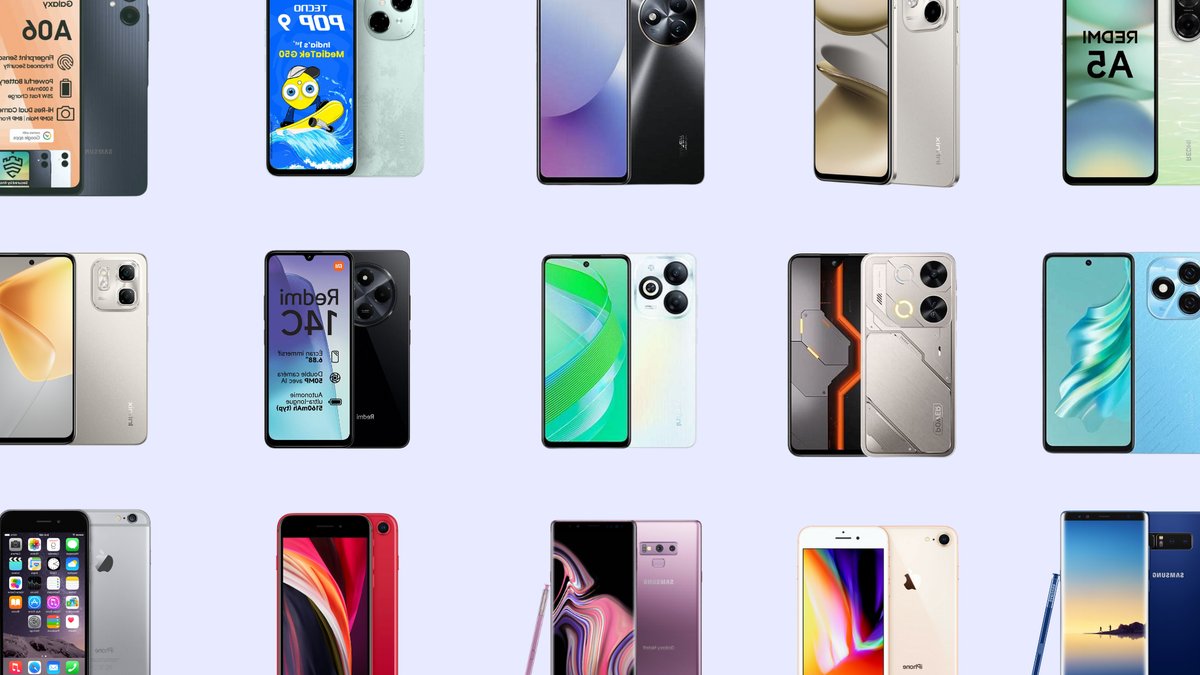
Smartphone shoppers in Nigeria have plenty of options when looking for devices under ₦200,000, as the market continues to expand with affordable technology. With September 2025 bringing new releases from major manufacturers, consumers can find phones that balance price with essential features. Whether for a student or a professional needing a secondary device, the list of available budget-friendly phones has grown significantly.
Leading the list is the Tecno POP 9, which has gained popularity for providing flagship-level features at a competitive price. The device includes a 6.67-inch IPS LCD display with a 120Hz refresh rate for smooth scrolling and an IP54 rating for water resistance. It runs on the Unisoc T615 processor with 3GB or 4GB of RAM, a 13MP rear camera, and a 5000mAh battery with 15W fast charging. Dual speakers add to the experience, making the POP 9 a solid choice for those wanting performance without a high price tag.
The Xiaomi Redmi A5 offers a massive 6.88-inch display, which is the largest in the budget category, and runs on Android 15 Go edition. It comes with a 5200mAh battery and a 32MP main camera, making it suitable for media consumption and basic photography. Users often praise its reliability and smooth performance for everyday tasks.
Related: Nigeria’s shift to cashless survival tips
For photography enthusiasts, the itel A80 provides a notable upgrade with a 50MP main camera in its 4GB variant. The device also features a 120Hz display and runs on Android 14 with itel’s clean user interface. This combination of camera quality and smooth performance makes the A80 a strong contender in the budget segment.
Samsung’s Galaxy A06 enters the ultra-budget space with a focus on software support and ecosystem integration. While priced higher than some alternatives, it offers 25W fast charging and guaranteed Android updates for at least two years. For users who prioritize brand reliability and long-term software support, the A06 justifies its cost.
For those in areas with inconsistent power supply, the itel P70 stands out with its dual-battery system. The device combines a 6000mAh internal battery with a 4000mAh charging case, delivering a total capacity of 10,000mAh. The case also doubles as a power bank, and the phone includes a 4-year battery health guarantee. This setup is ideal for users needing extended usage without frequent recharging.
Related: UBA rolls out N150 million Super Savers Promo
Mid-range options like the itel S24 bring impressive camera specs to the budget market, featuring a 108MP main sensor with AI enhancement and night mode capabilities. The Infinix Smart 9 appeals to students and young professionals with its 6.7-inch display and dual SIM support, while the Xiaomi Redmi 14C offers up to 6GB of RAM for smoother multitasking. At the upper end of the budget, the Tecno Spark 30 provides premium design and build quality for users seeking flagship-level specifications without exceeding ₦200,000.
While these devices offer strong value, it is worth considering how the rapid pace of innovation in this segment might affect long-term resale value. As manufacturers continue to push boundaries with features like higher refresh rates and advanced camera systems, older budget models could see a quicker depreciation than their more expensive counterparts. Consumers who plan to keep their phones for several years might benefit from selecting models with proven durability and reliable software support, even if the initial price is slightly higher.


