


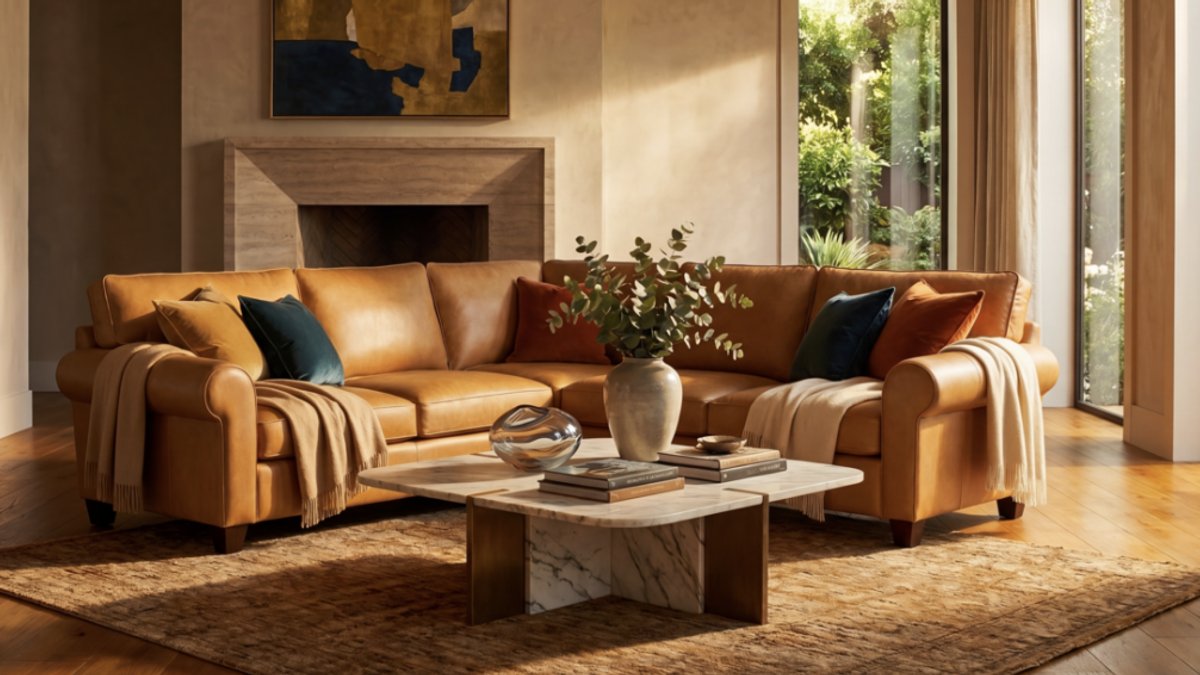
DreamSofa, a direct-to-consumer custom furniture manufacturer, reports a growing share of its order consultations include requirements related to working from home. The company has published specification guidance for buyers whose primary living-room seating is used during part of the workday.
Workplace surveys and federal labor statistics show that a substantial share of U.S. knowledge workers work from home for some or all of the week. This shift has produced a documented increase in demand for desks and task chairs, but the effect on upholstered living-room seating has been slower to appear.
DreamSofa says the language used by customers to describe their requirements at the point of order has changed, with terms like laptop comfort, sitting posture, and video-call backgrounds becoming more common. “Nobody set out to redesign the living room,” said a DreamSofa spokesperson. “The workday moved into it gradually.”
How Work Use Changes Seating Specification
Extended seated work places different demands on a sofa than evening use, and DreamSofa says those differences correspond to specifiable construction choices. Cushion firmness and resilience affect posture over long periods, with higher-resiliency seat cores resisting the gradual slouch that soft lounge cushions permit.
Seat depth works in the opposite direction from current lounge trends, with a shallower seat allowing a working posture with the feet on the floor and the lower back in contact with the backrest. Arm height and width become functional rather than decorative dimensions, since arms are used to support forearms during laptop use.
Mixed-specification modular orders, such as a firmer section within an otherwise softer sectional, have become a common way for households to meet a work requirement without changing the seating for everyone else. DreamSofa notes that none of these preferences is unusual in itself, but what is new is buyers specifying them at the point of purchase.
Layout, Zoning, and Camera Sightlines
Home working has also affected where furniture is placed, with video calls making living rooms visible to colleagues. DreamSofa says a subset of buyers now plans seating placement around camera sightlines, either orienting a sofa to produce a usable background or using modular sections and open-backed configurations to separate a working area from a living area.
The company describes this as a residential version of a practice already common among architects and designers, who use modular seating to define zones within open floor plans. In apartments where one room functions as an office during the day and a living room in the evening, a reconfigurable system can be rearranged between weekday and weekend layouts.
The less visible consequence, according to DreamSofa, is arithmetic. A sofa in a two-commuter household might see three or four hours of daily use, concentrated in the evening, while the same sofa in a household where someone works from home can see eight to twelve hours, as work hours are added to leisure hours.
Guidance and Recommendations
DreamSofa says the increase in use is sufficient to shorten the service life of lower-specification seating considerably, and that it directs buyers in this position toward the same specifications it recommends for multigenerational and pet-owning households: high-resiliency cushion cores, fabrics with high double-rub abrasion ratings, and kiln-dried hardwood frame construction.
The company is explicit about the boundaries of the guidance, noting that ergonomics literature is consistent that sustained, focused desk work is best performed at a properly configured workstation. The guidance addresses the portion of the workday that does not take place at a desk in any case, and households where a dedicated office does not exist.
DreamSofa pairs its specification guidance with posture recommendations: feet flat on the floor, the laptop raised on an arm or tray rather than resting directly on the lap, and a change of position each hour.
In the context of the shift to remote and hybrid work, DreamSofa’s observations are consistent with a broader trend of households treating home working as a settled arrangement rather than a provisional one. This trend is also reflected in the company’s observations, which found that buyers are evaluating furniture on cost per year of use rather than on purchase price alone.
As a result, buyers are specifying primary furniture for dual use at the point of purchase, rather than improvising with lap desks or other temporary solutions. This shift in consumer behavior has significant implications for the furniture industry, as manufacturers like DreamSofa adapt to meet the changing needs of households and workers.


