


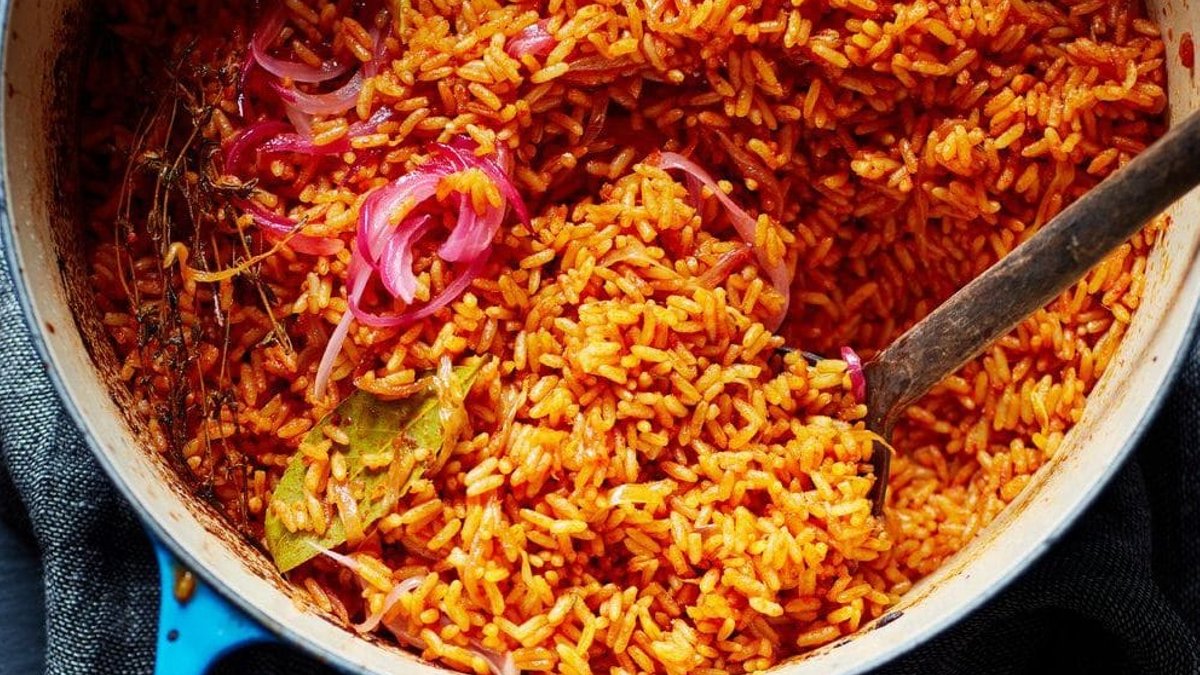
In Nigeria, a pot of jollof rice now costs more than many families earn in a week. The dish, once common at celebrations and daily meals, has become a luxury as prices rise across the country.
The latest SBM Intelligence Jollof Index shows the cost of preparing a single pot for a family of five rose from ₦4,087 in 2016 to ₦27,528 by June 2025. In Bauchi State, the price has reached ₦41,050, nearly 60% of Nigeria’s ₦70,000 minimum wage. Lagos traders at Balogun Market report prices exceeding ₦23,000, while Abuja’s Wuse Market sees costs climb past ₦33,000 in some areas. Port Harcourt has seen a 55% increase in just six months.
The Human Cost Behind the Numbers
Social media is filled with accounts of families skipping meals or reducing portions to survive. A photo of an empty plate with the caption “Dinner is served” has become a grim joke. Parents post videos explaining how they’ve had to skip meals and reduce portion sizes just to survive. The emotional strain appears in messages expressing fear about the country’s future.
Related: 2025 Budget Stacked with Debt and Salaries
Jollof rice holds deep cultural meaning. Weddings, holidays, and religious festivals traditionally center around the dish. Yet the ingredients that define it have grown unaffordable. Turkey, once a budget protein at ₦1,500-₦1,700 per kilogram, now sells for ₦8,000-₦10,500. Tomatoes and peppers have jumped 300%, while a 50kg bag of rice ranges from ₦75,000 to ₦99,000 depending on location.
Multiple failures drive the crisis. The 2023 removal of fuel subsidies caused transportation costs to spike. Currency devaluation made imports more expensive, and ongoing insecurity in farming regions disrupted production. Farmers left their land, supply chains broke, and prices kept climbing.
Families now face difficult choices. The dish that once symbolized togetherness now stands for sacrifice.
Related: AI’s rise leaves ads forgettable
How Nigerians Are Adapting
Without effective government action, communities are creating their own solutions. Across the country, families are developing innovative survival strategies that highlight their adaptability and resilience. Social media is filled with testimonies of parents replacing meat with cheaper alternatives, or eliminating it entirely.
The psychological toll is evident in the growing number of posts where Nigerians express feelings of hopelessness and desperation about their country’s future. Yet even in this darkness, there are glimmers of hope and resilience that showcase the indomitable Nigerian spirit.
The jollof index was once just an economic measure. Now it reflects resilience. The dish’s price may have changed, but its role in bringing people together hasn’t.


