


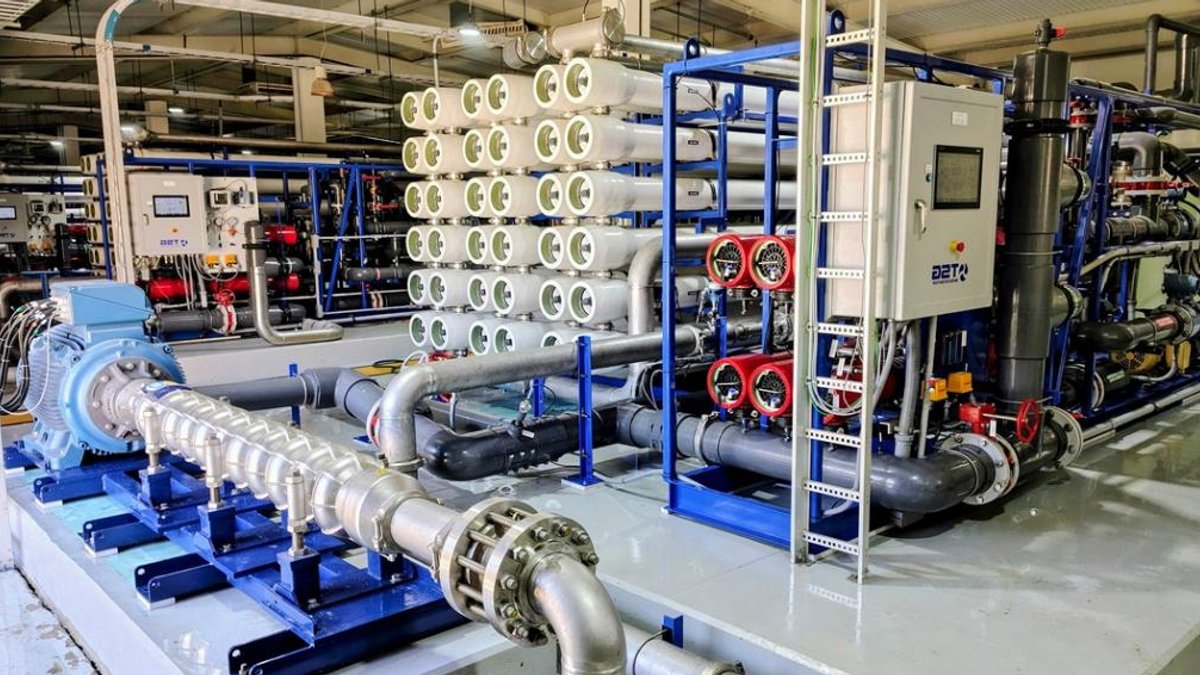
A new desalination unit at the Chileno Bay Golf & Beach Club in Baja California Sur has increased daily freshwater production by 700,000 gallons. The technology extracts more drinking water from seawater while cutting waste.
The system, installed by Florida-based TSG Water Resources, is the third high-recovery BiTurbo™ seawater reverse osmosis train at the Los Cabos resort. It raises total desalination capacity to six trains, four of them added by TSG since 2023.
More water, less brine
The BiTurbo™ design, created by Massachusetts engineering firm FEDCO, uses a two-stage turbocharger to achieve recovery rates up to 60%. That output nearly doubles potable water from the same seawater volume as a conventional single-stage system without higher energy use. The benefit is reduced brine discharge, important in coastal areas where concentrated saltwater can damage marine life.
TSG states the new train meets World Health Organization drinking water standards. A programmable logic controller system with remote monitoring lets operators adjust settings off-site. The company has built or upgraded desalination plants across Mexico, the Caribbean, and the U.S., with recent focus on Baja California Sur.
Chileno Bay, a 1,600-acre resort featuring a Greg Norman-designed golf course, has used desalination since 2018. Water demand grew with expansion, including a new residential development. The latest train is part of a long-term contract, allowing the resort to produce enough water for about 5,000 households daily.
Baja California Sur is one of Mexico’s driest states, with groundwater supplies strained by tourism and farming. Desalination is now essential, though most plants recover only 35-45% of processed seawater, leaving the rest as brine. That dense brine sinks and can harm seafloor ecosystems if not properly managed.
Related: Jeff Emalaba explains AI deal scoring techniques
The BiTurbo™ system’s higher recovery rate means less brine per gallon of freshwater. For Chileno Bay, this improves operational efficiency and environmental compliance. While the technology isn’t new, its use in hospitality remains uncommon. Most high-recovery plants serve cities or industries where water scarcity is urgent. Resorts have traditionally treated desalination as a utility expense, not a sustainability feature.
The change may reflect how luxury developments now market themselves. Water shortages in Baja have drawn attention, with protests over groundwater use and temporary hotel closures during droughts. A resort producing more water with less environmental impact gains an edge, especially for guests paying premium rates.
TSG’s CEO, Jason Erickson, highlighted the project’s benefits. “High-recovery BiTurbo™ technology delivers more clean water per gallon of seawater treated,” he said. “This supports our client’s operations and the coastline’s long-term health.”
The new train began operating in late August. TSG did not reveal the installation cost, but similar systems typically cost 10-15% more than conventional plants. Payback periods range from 5-7 years through lower energy and brine disposal expenses.
The resort’s water supply is stable for now. In a region where aquifers are shrinking and desalination is becoming standard, the question remains whether other properties will adopt this approach or wait until forced to act.
Recent branches open across Mexico show how infrastructure investments can address regional needs.


